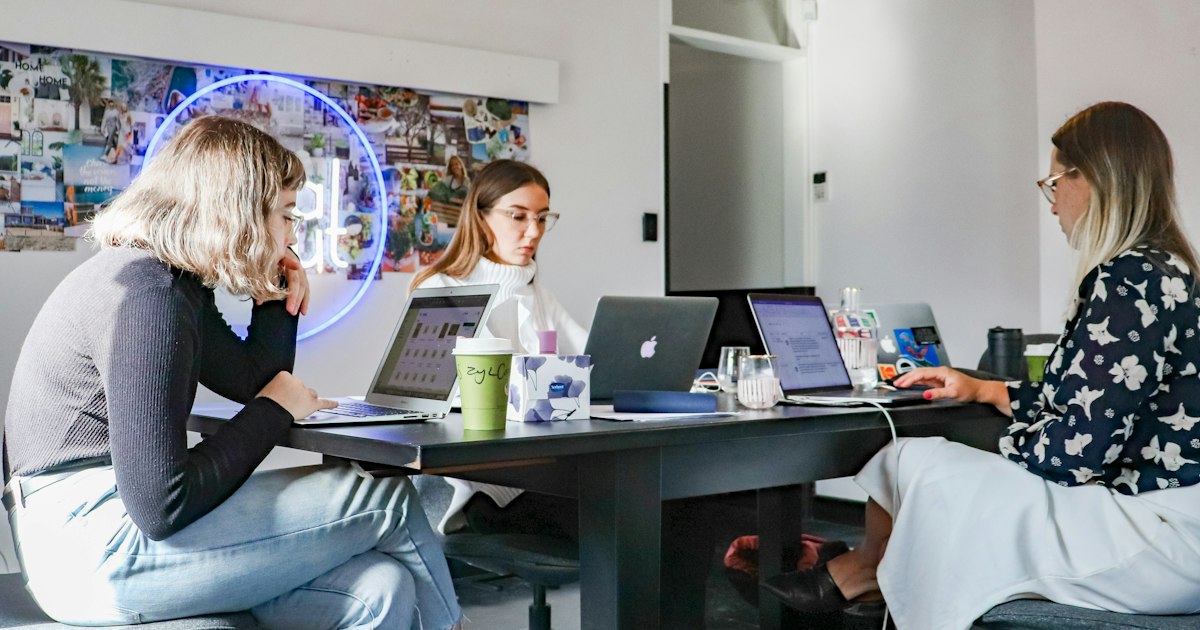
Four weeks after setting up my home office, I pulled a muscle in my back. It was a sharp reminder that working from home carries physical risks as well as practical ones.
My back had been trouble-free since I started using a coworking space a few years earlier, so I had begun to assume I was simply past back pain. I was wrong. This time the strain was mild, a warning shot, and it pushed me to take ergonomics seriously again.
As women running businesses from home, we often juggle client work with caring responsibilities, household admin and the temptation to squeeze work into whatever corner is free. There is no occupational health team to carry out a display screen equipment (DSE) assessment, and no one else will notice that you are hunching over a laptop on the kitchen table. That makes back care for women working from home a business issue, not a personal luxury.
According to the Health and Safety Executive (HSE), musculoskeletal disorders remain one of the most common types of work-related ill health in Great Britain. The most recent published figures, for 2023/24, estimate that 473,000 workers were suffering from a work-related musculoskeletal disorder, accounting for around 6.7 million working days lost. Back pain is the most frequently reported problem. With millions of us still working from home at least some of the time, Office for National Statistics (ONS) data from 2023 show that 44% of UK workers had worked from home at some point, including 16% working exclusively from home and 28% in hybrid arrangements. Looking after your back is essential business maintenance. For context on the scale of women in business across the UK, see our key facts page.
Back care for women working from home starts with your workspace
Move away from the sofa. Seriously. Sofa working might feel comfortable for ten minutes, but it quickly twists your spine into positions it was not designed to hold.
If you can, set up a dedicated workstation in a separate area. Keep your equipment, documents and chargers in one place so you are not constantly twisting, reaching or hunting for things. Good lighting matters too: if you are straining to read the screen or paperwork, you are likely to crane your neck and round your shoulders.
Invest in a good quality, adjustable office chair. Your feet should rest flat on the floor, thighs roughly horizontal, and your arms level with your keyboard. Your lower back should be supported, either by the chair’s lumbar support or a rolled-up towel or cushion placed in the small of your back. If your chair is too low, use a footrest or a sturdy box; if your desk is too high, raise your chair and support your feet.
Your screen should be at eye level and about an arm’s length away. If you work on a laptop, use a separate keyboard and mouse and raise the laptop on a stand or a pile of books. Looking down at a screen for hours causes neck strain, headaches and rounded shoulders, which all feed into back pain.
The HSE provides a free display screen equipment checklist that is just as useful for home workers as it is for office managers. Working through it takes ten minutes and can save you weeks of discomfort. If you are an employer, even of yourself through a limited company, you have the same DSE duties for home workers as you do for office-based staff under the Health and Safety at Work etc. Act 1974 and the Management of Health and Safety at Work Regulations 1999.
Poor posture and badly arranged equipment are linked to a range of problems, including:
- Lower back pain
- Neck strain and headaches
- Shoulder tension
- Repetitive strain injury (RSI)
- Tingling or numbness in the hands and fingers
Spending a little money on the right setup, or even improvising with books, boxes and cushions, is far cheaper than losing days to pain or physiotherapy. Our guide to what it really costs to set up a home office breaks down the essentials. If you are self-employed, some of these costs may be allowable expenses. Our guide to home working expenses self-employed people can claim through HMRC explains the current rules, including the simplified expenses flat rate.
Limber up before you start work
It is tempting to reduce your commute to the distance between bed and desk, but that is one of the worst things you can do for your back. Sitting is a physical demand in itself, and your body needs a warm-up just as it would before exercise.
Before you open your inbox, do a few gentle stretches or a short yoga flow. The NHS has a range of back pain exercises and advice that take only a few minutes.
Better still, get dressed and go outside. A short walk before work, sometimes called a “fake commute”, wakes up your spine, improves circulation and reduces stress. If you can walk in a park or green space, you get the added benefit of improved mood and concentration. Stress tightens muscles, and tight muscles are far more prone to strain.
Repeat the process at the end of the day. A brief evening walk or stretch session signals to your body that work is over and helps release tension before it settles into your shoulders and lower back.
Keep moving throughout the day
Long periods of sitting put sustained pressure on your spinal discs and hip flexors. The NHS advises breaking up long periods of sitting with short bursts of activity. Ideally, stand up and move every 20 to 30 minutes; at minimum, once an hour.
Time disappears when you are absorbed in a task, so do not rely on memory. Set a timer, use a phone alarm, or enable movement reminders on your watch. Even 30 seconds of standing, shoulder rolls or a walk to the kitchen helps.
Standing desks are increasingly affordable, but you do not need specialist equipment. A sturdy pile of books can raise your laptop for a standing session. Standing uses different muscles and encourages subtle shifts of weight, but it is hard to maintain all day. Alternate between sitting and standing, and avoid locking your knees.
Other easy ways to build movement into your working day include walking during phone calls, using the upstairs loo, and scheduling “movement meetings” where you discuss ideas while strolling around the garden or local streets.
Listen to what your body tells you
If you feel twinges, stiffness or a dull ache, pay attention. These are early warnings, not inconveniences to push through. For a few days, sit less, move more and keep stretches gentle. Lying flat on the floor for a few minutes can relieve pressure on your lower back, and a warm bath or heat pack can ease muscle tension.
If pain persists for more than a few days, radiates down your leg, or is accompanied by numbness or weakness, see your GP or a physiotherapist. Early treatment prevents a minor strain from becoming a chronic problem that sidelines your business.
Staying hydrated can also help, not because water magically fixes backs, but because regular trips to refill your glass and visit the loo keep you moving.
Above all, take your wellbeing as seriously as you take your to-do list. Back care for women working from home is one of the smartest investments you can make in your business. You only have one back, and protecting it protects your income, your focus and your capacity to keep going.
Turn these tips into action steps
- Run through the HSE DSE checklist this week and adjust your workstation.
- Set a recurring timer to stand and move every 30 minutes.
- Build a five-minute morning stretch or walk into your routine.
- Check whether your chair, desk and screen position support a neutral spine.
- Seek professional help if pain lasts more than a few days or affects your movement.