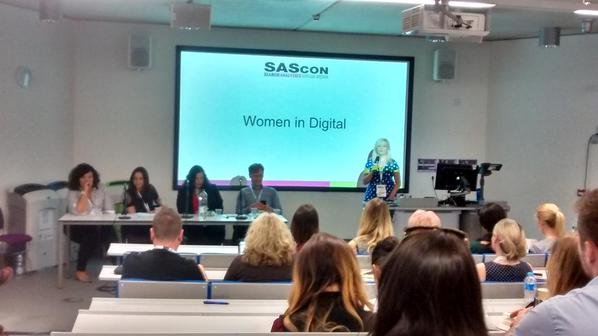
When this article first appeared in 2015, the Manchester Women in Digital panel focused on a stark statistic: men were far more likely than women to reach management positions in the digital sector. More than a decade later, the conversation has not gone away. Women in digital across the UK are still underrepresented in senior technology roles, still paid less than men on average, and still underrepresented at founder and board level.
The difference now is that these issues are discussed openly and many organisations are taking action. The challenge is turning that awareness into measurable, lasting structural change.
The current picture for women in digital
Data from BCS, The Chartered Institute for IT, shows that women held around one in five IT specialist roles in the UK in 2024. The wider technology workforce is only slightly more balanced. At senior level the gap widens: men continue to occupy the large majority of technology director positions, and the median gender pay gap in the sector remains significant.
According to ONS provisional data for 2024, the median gender pay gap for full-time employees in professional, scientific and technical activities stood at 8.3%. Technology sub-sectors frequently report wider gaps than this average. These disparities are not simply about entry-level recruitment; they reflect who progresses, who is promoted and who stays.
The gap is also visible in investment. Beauhurst data for 2023 shows that all-female founder teams received less than 2% of UK equity investment, and mixed-gender teams received a further small share. The British Business Bank and the Alison Rose Review of Female Entrepreneurship continue to highlight access to finance as a critical barrier for women-led tech businesses.
These figures suggest that the “pipeline” problem is only part of the story. Women are entering digital careers, but too many stall before they reach leadership or leave the industry altogether. Understanding why requires looking at education, workplace culture and the way careers are structured.
Education remains a stubborn barrier
Education is still where many digital career paths narrow. Department for Education data for 2024 shows that female entries accounted for around 21% of GCSE Computer Science candidates and about 15% of A-level Computing entries. Apprenticeship data from the Department for Education and the Institute for Apprenticeships and Technical Education tells a similar story: women make up roughly one in five technology and digital apprenticeships.
Part of the problem is image. Coding and software engineering are still portrayed as male pursuits, while the breadth of digital careers—content strategy, user experience, product management, data analysis, digital marketing and project delivery—is often invisible to young women choosing subjects. As the industry has matured, many of the most influential roles no longer require deep technical coding skills. Highlighting these pathways is essential if the sector is to attract a wider range of talent.
Careers advice also lags behind the market. Schools, colleges and universities need stronger links with digital employers, and girls need to see women already succeeding in the field. Digital skills training, work experience and mentorship at school age can all help to shift perceptions before choices harden.
Industry culture holds progress back
Even with better education, workplace culture can make or break a woman’s digital career. The sector grew out of a technically focused environment that was historically male-dominated, and traces of that legacy remain. Women still report feeling outnumbered in meetings, overlooked for high-profile projects, and judged differently when they assert themselves.
Language matters too. Skills often associated with women—collaboration, communication, empathy—are still sometimes dismissed as “soft”, even though they are critical to product development, client relationships and team leadership. Recognising and rewarding these capabilities properly is a cultural shift that benefits everyone.
Confidence and visibility are recurring themes. Many women say they feel less likely than male colleagues to put themselves forward for promotion or negotiate pay. That is not a personal failing; it reflects environments where self-promotion is penalised or where the criteria for advancement are opaque. Coaching, sponsorship and clear promotion frameworks can help to level the playing field.
Mentors do not have to be women. Several successful female leaders credit early male bosses who encouraged them to ask for challenging assignments and pay rises. However, women’s business networks and peer groups remain invaluable for sharing experiences, building confidence and developing career strategies.
Work-life balance and the flexibility paradox
Flexible working has moved from a perk to an expectation in much of the digital sector, accelerated by the pandemic. Remote and hybrid roles can support recruitment, retention and caring responsibilities. Yet flexibility can be a double-edged sword: if not managed well, it can reduce visibility and limit access to the projects that lead to promotion.
Maternity and parental leave remain pivotal moments. Many women lose confidence during extended leave and worry about returning to a role that has moved on. Good returner programmes, keep-in-touch days and active sponsorship during leave can make the difference between a woman staying on track and stepping away. For women planning a return, resources such as Career Returner Women UK: How to Restart in 2026 offer practical guidance.
Shared parental leave exists, but uptake remains low. Until caring responsibilities are genuinely shared, and until senior men routinely take flexible and parental leave, women will continue to carry a disproportionate career penalty.
What needs to change
Change requires action across the system. Employers should collect and publish pay and progression data by gender, set clear targets for women in leadership, and review recruitment and promotion processes for bias. They should also invest in mentorship, sponsorship and returner support, and ensure flexible working is available at every level, not just junior roles.
Education providers and policymakers must improve digital careers advice, challenge stereotypes early, and support routes such as apprenticeships and retraining programmes for women returning to work. Gender pay gap reporting keeps pressure on larger employers, but smaller digital firms should adopt the same discipline voluntarily.
Investors also have a role. Funds that track founder gender, set diversity targets and broaden their networks are more likely to spot opportunities that homogeneous partnership rooms miss. The female founder VC funding gap will not close by accident; it needs deliberate changes to sourcing, decision-making and portfolio support.
Practical action steps for women in digital
- Audit your own pay and progression data by gender, even if you are below the mandatory reporting threshold.
- Review job adverts and promotion criteria for biased language or opaque requirements.
- Introduce or improve mentorship, sponsorship and returner programmes.
- Make flexible working a senior-level norm, not a junior concession.
- Support girls and women into digital careers through outreach, work experience and visible role models.
- Build relationships with investors and networks that actively back women in digital.
Women in digital have been discussing these issues for more than a decade. The real test now is whether employers, educators, investors and policymakers turn that conversation into measurable progress. The data is clear, the barriers are understood, and the business case is well made. What still needs to change is the speed at which the UK tech sector acts.